This post is the second in my series on “parts of speech.” Workshop teachers often instruct aspiring fiction writers to begin their stories: “in media reas” (in the middle of the action). Without verbs, a story would have no action. How dull would that be? Verbs – Verbs are action words. Nouns can “do” verbs. Dogs bark. Writers have blogs. Friends are the friendliest. (Thanks to Moose A. Moose, Nick Jr.’s resident mascot and musician). Those are the basics. Now let’s explore types of verbs. Intransitive verbs: These powerful verbs work with a noun to express a complete thought: Dogs [Read more…]
Using the C-Words Properly
I’d like to talk about a few commonly confused words today. The usage rules for one of them had me so confused I simply stopped using the word for several years. Only recently did I realize it’s hard to go wrong when you use the word. The words in question? COMPOSE and COMPRISE What tripped me up about these two words? Apparently, in many cases, they can be used interchangeably. But comprise can be used in instances where “composed of” would not make sense – and vice versa. Let’s get down to definitions Comprise means, according to dictionary.com, to include, [Read more…]
The Noun's the Thing
Did you ever play Mad Libs as a kid? If you did, you remember filling in nouns, verbs and adjectives to make up wacky stories. But you might not remember what those words mean. Based on readers’ questions over the past few weeks, I’m launching a new series defining grammatical terms. We’ll start with the basics and then move on to more obscure terms like predicates, conjunctions and gerunds. I hope I haven’t lost you with those. Bear with me and in a week or so, you, too, will be able to speak like Mrs. Johnson from eighth grade English [Read more…]
Should You Ever Start a Sentence with “And?”
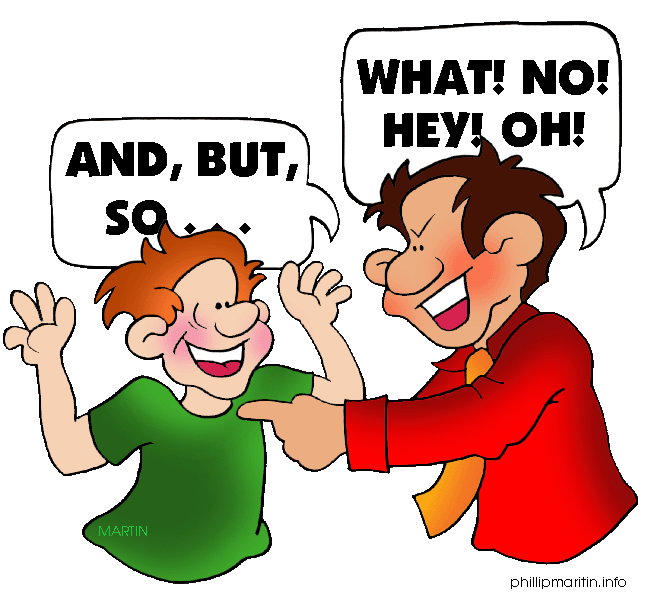
For many of us, it’s one of the first grammar rules we learned: Never start a sentence with “And.” The reasoning? “And” connects two clauses. For those of you who zone out when we start using scary grammar terms like “clause,” a clause is just a group of words with a noun (subject) and a predicate. What is a predicate? (This could go on forever, but stick with me and you’ll have all you need to know in a moment). A predicate is a phrase that describes something “true of” the noun. It can be something the noun is doing, [Read more…]
How Many Liberties Can We Take?

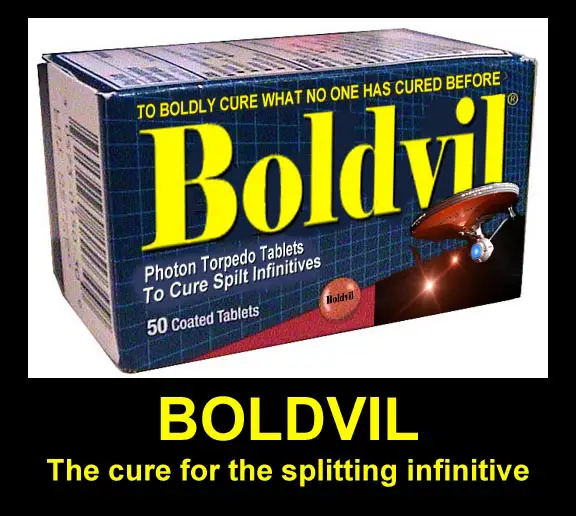
Has the Web changed the way you write? I’m not talking about matters of content and style most of us know–short paragraphs, bullet points, subheads, etc. I’m referring to the finer aspects of punctuation, grammar and style. For instance, which words use hyphens? And what rules can a writer safely break? I think most writers agree that writing for the Web is more casual, and we have greater leeway to split infinitives, end sentences with prepositions, and otherwise do whatever it takes to make our writing more clear and conversational. But that’s a slippery slope. To paraphrase an old adage: [Read more…]
Quotations and Punctuation: A Tale of Cultural Differences
Grammar is confusing enough for those of us in English-speaking countries, with multiple style guides, conventions that have fallen out of fashion, and rules people simply forget. If all that’s not enough, Americans also follow different rules than our English-speaking neighbors to the North. I’m not talking about the random letter U Canadians like to throw into words or even how they want to spell words that should end in “ck” with a “que,” instead. I’m talking about their use of quotation marks and punctuation together. Here in the U.S., periods and commas always go inside the quotation marks. In [Read more…]
Will You Lose Weight or Just Loosen Your Belt?

I’m stuffed. I realized as I loosened my belt around the Thanksgiving table this evening, I’m going to have to lose some weight or I’ll face a challenge in the new year. What does all this have to do with a grammar blog? Simply this: Thanksgiving and its emphasis on eating reminded me that it’s a great time to reiterate the difference between “lose” and “loose.” If you’re too loose with your diet during the holidays, you risk gaining weight that you’ll have to lose next year. On the other hand, if you lose weight, your clothes will be loose. [Read more…]
Startups, start-ups & other sticky situations

I love when a situation arises that forces me to question my own judgment and knowledge. Perhaps I’m still gun-shy from the other day’s ‘Til v. Till debacle but I love when a grammar rule or convention trips me up. This happened recently while I was copyediting for a technology client. The original copy had the word “startup” (as in, a new business) spelled both with and without a hyphen. I’m a stickler for consistency. Spell something wrong, and people may not know it – as long as you’re consistent in that misspelling. I changed them all to the hyphenated [Read more…]
Mea Culpa
Have you ever been so absolutely sure of a grammar rule you haven’t looked it up in decades? Did you cringe whenever you heard or saw people break the rule? Did you correct people with a righteous tone in your voice? Only to find out, years later, that you were wrong? In writing this column, I’m learning even more about grammar than I ever thought possible. I’ve been covering the basics, so far, but I’ve been researching more complex topics for the future. In doing so, I’m even learning things I thought I knew! I forget which teacher, parental unit [Read more…]
Grammar Checker: Friend or Foe?
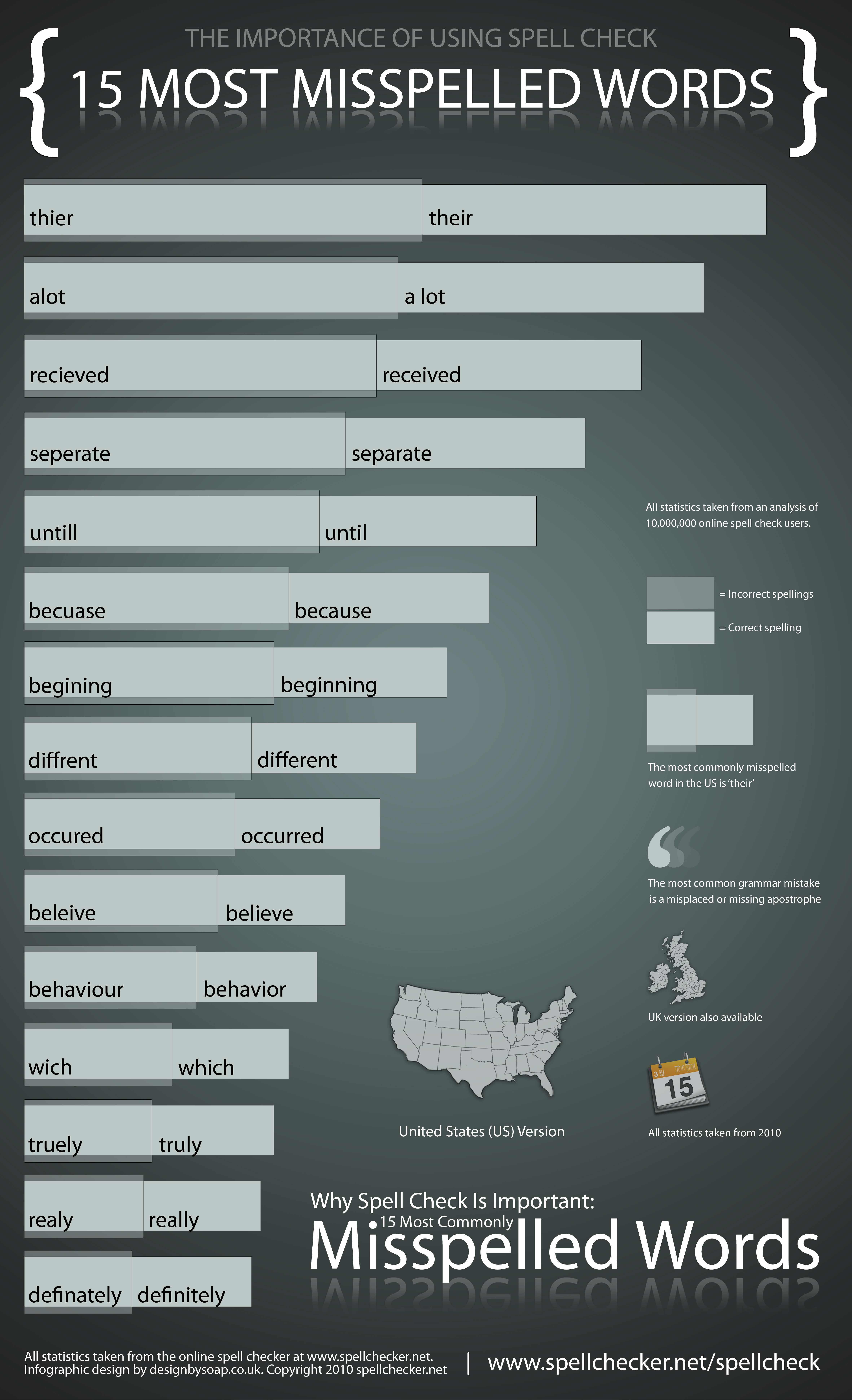
When grammar checkers first came out – I think it was shortly after sliced bread and just before the Ford Pinto – people thought they were the greatest thing. A computer could tell you what was wrong with your writing. Just click “change” and your work would be perfectly publishable. It was the end of proofreading! The end of errors! Um… Then we began looking over the copy after it was so meticulously spell-checked and saw sentences like: “The children put there clothes over their.” Oops. When our word processing programs began to make ridiculous suggestions, like changing the spelling [Read more…]
The Grammar Devotional, a Review
I owe you all an apology. You may have come to expect my posts on Mondays, or at least earlier in the week than Thursday. I’ve been spending every free minute pouring over the latest, greatest, newest, most information-packed (should we add another adjective?) grammar books on the market – to pick one to give away for my first contest. I’ve learned some exciting rules and stylistic conventions I didn’t know before. (Because I’m one of those geeks who thinks grammar truly is exciting!) I’ve made up my mind that, in my purely subjective opinion, every writer should have a [Read more…]
'Your' Grammar Matters When 'You're' Writing
Nearly three decades later, I still remember one of my favorite lines from a popular television show. Rachel and Ross of Friends got into a fight and Ross screamed, “Oh, and by the way – Y-O-U-apostrophe-R-E is ‘you are.’ Y-O-U-R spells YOUR!” When someone irritates you, poor grammar can be the tipping point. So how can you remember these commonly misspelled words? If you’re me, then that scene from Friends sticks so strongly in your mind, you’ll never forget it. But if not… Simply remember that an apostrophe always replaces a missing letter. Therefore, “you’re” has to be “you are,” [Read more…]
With Our Compliments…

“This Halloween, my daughter and I wore complementary fairy costumes. People were complimentary towards us, and many gave us complimentary treats.” I admit squeezing that last “complimentary” in there is pushing it. Certainly there’s a more concise way to word these sentences. But I couldn’t resist the play on words with these fun homophones… or the chance to get a little personal and show off our costumes. Now my secret is out: You are taking grammar instruction from a grown woman in a pink dress with large pastel wings. So let’s get down to business. Using complementary This word is [Read more…]
The Ins and Outs of Lines

“That girl looked like Kate from Lost,” I observed as we left the bank. “Who? The one on line?” my husband asked. I gave him a blank stare. “No, the girl in the bank… She looked like Kate from Lost.” “Yes. The girl on line… in the bank,” he specified, sounding frustrated. “Oh! Yes! Didn’t she?” And that is how using incorrect grammar can confuse people in spoken conversations. This is also how a teething one-year-old who wakes up every two hours can impact communication in a marriage. Admittedly, I wasn’t too swift on the uptake in the above conversation. [Read more…]
Is the Principal Really Your “Pal?”

I’ve addressed some fuzzy, obscure or debatable grammatical issues so far. But some rules just can’t be broken – word usage, for instance. One particular homophone sent me running for to www.dictionary.com the other day, so I decided it was time to address it. To take you back to second grade for a moment, a homophone is (according to www.dictionary.com) “a word pronounced the same as another but differing in meaning, whether spelled the same way or not…” On the other hand, a homonym is a word that sounds the same and is spelled the same, but has a different [Read more…]
The ITS Word
One of my editors sent me an email today with the subject head, “Oy!” This is usually not a good thing, but I hadn’t submitted a story recently and I didn’t owe him anything, so I didn’t panic. When I opened it and read his note, I laughed: “Sorry about my language, Dawn, but “how many times in ONE SENTENCE can someone f- up the “its” word????? (Since you’re writing that new blog….)” The offending press release read as follows (identifying names omitted): “[Company name]’s new [title] unit is targeting strategic partnerships with Fortune 500 companies to specifically align it’s [Read more…]
The Thin Line Between Buzzword & Cliche
Language changes. Words we’d never heard decades (or years!) ago are now part of our lexicon. It’s good when language evolves to keep up with technology, trends, and even our culture and society. But sometimes it goes too far. As writers, we don’t have to adopt every slang or popular phrase we hear. This post, written by a fantastic blogger I stumbled upon (quite literally!) the other day, hammers home the point in a witty way. Sales and marketing types (including copywriters) are most often guilty of letting jargon infiltrate their writing. But all writers should be aware of the [Read more…]
Online AP Stylebook Resources
We just bought a house and I’ve spent the past few weeks moving. I snail mailed a contract to a new client because my printer isn’t hooked up. My office is filled with boxes and baby clothes (which need to get shuttled into the attic closets in our new cape) and I have 15 + years of magazines in Rubbermaid containers stacked in corners of the room. Why am I sharing all this? I jumped in as FWJ’s Grammar Guide in the midst of a hectic week and began tossing grammar rules at you. I hope you didn’t mind and [Read more…]
More than a Wink: How to Use a Semicolon
As a copyeditor, I often correct semicolon usage. If you don’t quite understand how to use a semicolon, you’re not alone; you wouldn’t believe how many professional writers use this little mark incorrectly. And I’m not talking about when you want to indicate a joke or teasing in a chat room. A semicolon should be used instead of a comma or a period to: Delineate items in a list when using commas would make the sentence confusing because there are commas within the items listed Separate two complete, but related, sentences Using semicolons in a list Commas typically separate items [Read more…]
Less Than v. Fewer: What’s the Difference?
As the newest blogger on the FWJ block, it wouldn’t be right to leave my readers in suspense for too long. I must address the tweet written by JoannaOC: “I want the line to be for people with ‘fewer than 10 items’ instead of those with ‘less than ten items.’” So many people get this grammar rule wrong (including editors of publications, who requested articles of “less than 1,000 words!”) it’s become accepted in society. Language purists, however, grimace at the mistake. But why does it have to be “fewer than 10 items?” Once you hear the answer, you’ll see [Read more…]
Are You Down With Grammar?
by Dawn Allcot I was dismayed to see #DownWithGrammar trending on Twitter the other day. Some people used the hashtag to bemoan their high school English classes, others to confess to bad spelling, and many to make fun of politicians and political signs. Others – and these are the ones I commend – turned the phrase around in a clever play on words: “I’m #downwithgrammar,” JoannaOC tweeted. “That’s why I want the line to be for people with ‘fewer than 10 items’ instead of those with ‘less than ten items.’” If you’re scratching your head at why the first is [Read more…]